
Chimpanzee tracking in Uganda is one of Africa’s most rewarding wildlife experiences, offering the opportunity to observe our closest living relatives in their natural forest habitat. Following a group of wild chimpanzees through the forests of Kibale National Park, Budongo Forest, or Kyambura Gorge provides a fascinating insight into their behaviour, social interactions, and remarkable intelligence. Whether you are planning a dedicated primate safari or combining chimpanzee tracking with gorilla trekking and a traditional wildlife safari, Uganda offers some of the best chimpanzee tracking experiences on the continent.
Chimpanzee tracking in Uganda is a guided wildlife experience that allows visitors to follow and observe wild chimpanzees in their natural forest habitat. Accompanied by experienced Uganda Wildlife Authority rangers and trackers, visitors venture into the forest in search of habituated chimpanzee communities that have become accustomed to the presence of humans.
Unlike a traditional game drive where wildlife is viewed from a vehicle, chimpanzee tracking is an active forest walk. Rangers use their knowledge of chimpanzee movements, vocalisations, nesting sites, and feeding areas to locate the chimpanzees. The experience can last anywhere from a few minutes to several hours depending on where the chimpanzees are found on a particular day.
Once the chimpanzees are located, visitors are typically allowed one hour to observe them as they feed, groom, rest, communicate, and move through the forest. Watching these intelligent primates interact with one another offers a fascinating glimpse into behaviours that closely resemble our own, making chimpanzee tracking one of Uganda’s most engaging wildlife experiences.
Uganda is home to one of the largest populations of chimpanzees in East Africa, with tracking opportunities available in Kibale National Park, Budongo Forest, Kyambura Gorge, and Kalinzu Forest. Each destination offers a different forest environment and tracking experience, allowing visitors to include chimpanzee tracking as part of a broader Uganda safari.
For many travellers, chimpanzee tracking in Uganda perfectly complements gorilla trekking, providing the opportunity to encounter two of Africa’s most remarkable primates during the same safari.
Uganda is widely regarded as one of Africa’s premier chimpanzee destinations, offering visitors the opportunity to observe wild chimpanzees in diverse forest environments while enjoying some of the continent’s highest tracking success rates. With an estimated population of more than 5,000 chimpanzees spread across protected forests and national parks, Uganda provides a variety of chimpanzee experiences that few other destinations can match.
One of Uganda’s greatest advantages is the diversity of locations where chimpanzee tracking is possible. While Kibale National Park is often considered the country’s flagship chimpanzee destination, visitors can also track chimpanzees in Budongo Forest near Murchison Falls National Park, the dramatic Kyambura Gorge in Queen Elizabeth National Park, and Kalinzu Forest in western Uganda. Each location offers a unique forest setting, different chimpanzee communities, and the opportunity to combine tracking with other safari experiences.
Uganda is also home to some of Africa’s most successful chimpanzee habituation programmes. Habituation allows researchers and conservationists to gradually accustom wild chimpanzees to human presence, making it possible for visitors to spend extended periods observing their behaviour while contributing to conservation efforts. The Chimpanzee Habituation Experience in Kibale National Park is particularly sought after by wildlife enthusiasts, photographers, and returning safari travellers looking for a deeper primate encounter.
Another reason Uganda stands out is the ability to combine chimpanzee tracking with a wide range of other wildlife experiences. Visitors can track chimpanzees in Kibale National Park before continuing to Queen Elizabeth National Park for classic game viewing, travelling onward to Bwindi Impenetrable National Park for gorilla trekking, or exploring Murchison Falls National Park for Big Five sightings. This makes Uganda one of the few destinations in Africa where visitors can enjoy both exceptional primate experiences and traditional wildlife safaris within a single itinerary.
Beyond the wildlife itself, chimpanzee tracking in Uganda takes place in some of the country’s most beautiful forest ecosystems. From the dense tropical forests of Kibale to the riverine woodlands of Budongo and the spectacular scenery of Kyambura Gorge, the setting is often as rewarding as the wildlife encounter itself.
For travellers interested in primates, wildlife conservation, photography, and authentic nature experiences, chimpanzee tracking in Uganda remains one of the most rewarding wildlife activities available anywhere in Africa.
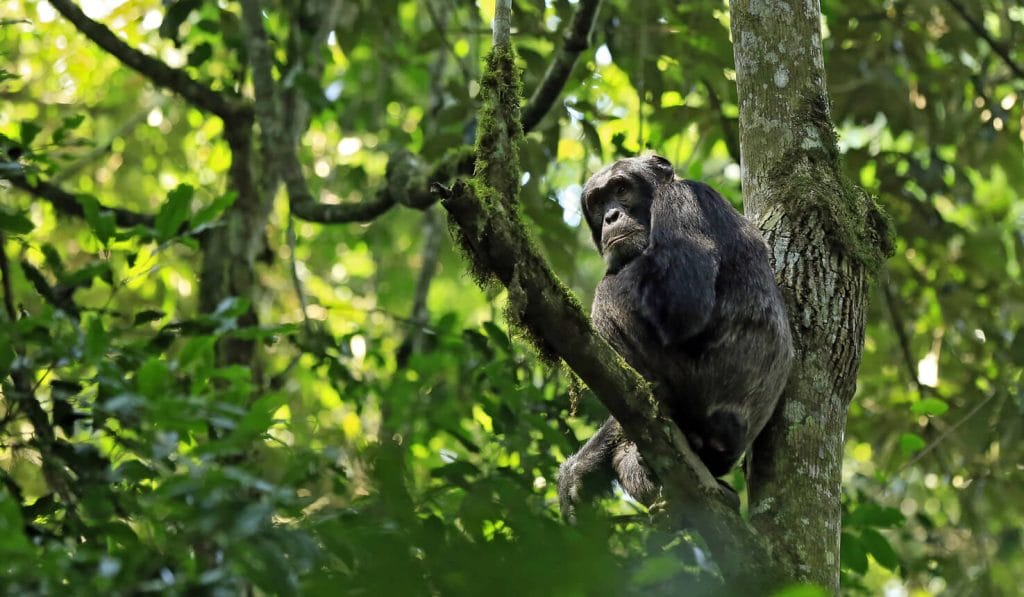
Uganda offers several excellent destinations for chimpanzee tracking, each providing a unique forest environment and tracking experience. While Kibale National Park is widely recognised as Uganda’s premier chimpanzee destination, visitors can also track chimpanzees in Budongo Forest, Kyambura Gorge, Kalinzu Forest, and the emerging Bugoma Forest conservation landscape. Choosing the right location often depends on your itinerary, budget, and the wildlife experiences you wish to combine with your chimpanzee tracking adventure.
Kibale National Park is widely regarded as the best place for chimpanzee tracking in Uganda and one of the finest chimpanzee destinations in Africa. Located in western Uganda, the park protects approximately 795 square kilometres of tropical rainforest and is home to more than 1,500 chimpanzees, making it one of the highest concentrations of chimpanzees on the continent.
The park is also known as the “Primate Capital of the World” due to its exceptional diversity of primates, including black-and-white colobus monkeys, red-tailed monkeys, grey-cheeked mangabeys, L’Hoest’s monkeys, blue monkeys, olive baboons, and vervet monkeys.
Chimpanzee tracking in Kibale National Park offers some of the highest success rates in Uganda, often exceeding 90%, making it the preferred choice for many visitors seeking a reliable chimpanzee encounter.
Kanyanchu is the main chimpanzee tracking centre in Kibale National Park and serves as the starting point for most standard chimpanzee tracking excursions. Located in the central sector of the park, Kanyanchu has hosted chimpanzee tracking activities for many years and is home to well-habituated chimpanzee communities.
Visitors attending a tracking session begin with a briefing from Uganda Wildlife Authority rangers before entering the forest in small groups. Morning and afternoon tracking sessions are available, allowing flexibility when planning a safari itinerary.
The forest around Kanyanchu is rich in wildlife and birdlife, and visitors frequently encounter other primates during their search for chimpanzees. Once the chimpanzees are located, visitors are allowed one hour to observe and photograph them as they go about their daily activities.
Buraiga is a newer chimpanzee tracking area located in the northern section of Kibale National Park. Developed to enhance visitor experiences and help distribute tracking activities across the park, Buraiga offers a quieter and less-visited alternative to Kanyanchu.
The area protects an important chimpanzee habitat and provides visitors with a more exclusive forest experience. The landscape differs slightly from the central sector of Kibale, giving returning visitors an opportunity to experience another side of the park.
As tourism infrastructure continues to develop around the northern sector, Buraiga is becoming an increasingly attractive option for travellers seeking a more secluded chimpanzee tracking experience while still benefiting from Kibale’s excellent chimpanzee viewing opportunities.
Budongo Forest is one of Uganda’s largest and most biologically diverse natural forests and is located within the greater Murchison Falls Conservation Area. For visitors planning a safari in Murchison Falls National Park, Budongo provides an excellent opportunity to combine chimpanzee tracking with traditional wildlife viewing.
The forest is renowned for its ancient mahogany trees, rich biodiversity, and healthy chimpanzee population. Tracking experiences typically take place within the Kaniyo Pabidi sector, where habituated chimpanzee communities can be visited under the guidance of experienced rangers.
Budongo offers a quieter and more intimate tracking experience compared to Kibale and is particularly appealing to visitors who want to include chimpanzee tracking without travelling further south to Kibale National Park.
Often referred to as the “Valley of Apes,” Kyambura Gorge is one of Uganda’s most scenic chimpanzee tracking destinations. Located within Queen Elizabeth National Park, the gorge forms a dramatic forested trench cutting through the surrounding savannah landscape.
Chimpanzee tracking in Kyambura Gorge is a unique experience because visitors descend from open grasslands into a lush underground forest ecosystem. The contrast between the surrounding savannah and the dense forest creates one of the most spectacular settings for chimpanzee tracking in Uganda.
While chimpanzee sightings can be less predictable than in Kibale National Park, the scenery and overall experience make Kyambura a rewarding addition to a Queen Elizabeth safari.
Located near Queen Elizabeth National Park in western Uganda, Kalinzu Forest is one of the country’s lesser-known but highly rewarding chimpanzee tracking destinations. The forest supports a healthy population of habituated chimpanzees and offers visitors an excellent opportunity to observe these remarkable primates in a natural forest environment.
Chimpanzee tracking in Kalinzu Forest is often considered a more affordable alternative to Kibale National Park while still offering high chimpanzee sighting success rates. The forest is also home to several other primate species, including black-and-white colobus monkeys, red-tailed monkeys, vervet monkeys, and olive baboons, adding to the overall wildlife experience.
One of Kalinzu’s greatest advantages is its location. Visitors can easily combine chimpanzee tracking with game drives in Queen Elizabeth National Park, boat cruises on the Kazinga Channel, and tree-climbing lion tracking in the Ishasha sector. This makes Kalinzu an attractive option for travellers seeking a diverse safari experience without significantly increasing travel times.
Whether you choose the world-renowned forests of Kibale National Park, the ancient woodlands of Budongo Forest, the dramatic landscapes of Kyambura Gorge, or the accessible forests of Kalinzu, chimpanzee tracking in Uganda offers exceptional opportunities to observe our closest living relatives in their natural environment.
Bugoma Forest is one of Uganda’s emerging chimpanzee tracking destinations and offers visitors the opportunity to experience a less-visited forest ecosystem while contributing to important conservation efforts. Located between Murchison Falls National Park and Kibale National Park, the forest protects a significant chimpanzee population as well as the endangered Uganda mangabey, a primate species found only in Uganda.
Chimpanzee tracking in Bugoma provides a more exclusive and off-the-beaten-path experience compared to Uganda’s more established chimpanzee destinations. The forest is rich in biodiversity and supports numerous bird species, monkeys, butterflies, and forest mammals.
Visitors who choose Bugoma often appreciate the quieter atmosphere and the opportunity to support community-based conservation initiatives that help protect this important forest landscape. Chimpanzee tracking permits in Bugoma are generally priced lower than Kibale permits, making the forest an attractive option for travellers seeking a more affordable primate experience.
A chimpanzee tracking permit is required for anyone wishing to track chimpanzees in Uganda. Permits are issued by the Uganda Wildlife Authority (UWA) and should be booked well in advance, particularly during the peak travel seasons.
| Visitor Category | Permit Price |
|---|
| Foreign Non-Resident | USD 300 |
| Foreign Resident | USD 200 |
| Rest of Africa | USD 100 |
| East African Citizen | UGX 180,000 |
Kibale National Park remains Uganda’s premier chimpanzee tracking destination and offers some of the highest chimpanzee sighting success rates in Africa.
| Visitor Category | Permit Price |
| Foreign Non-Resident | USD 400 |
| Foreign Resident | USD 300 |
| Rest of Africa | USD 250 |
| East African Citizen | UGX 250,000 |
The Chimpanzee Habituation Experience allows visitors to spend significantly more time with chimpanzees than a standard tracking excursion and is ideal for photographers, wildlife enthusiasts, and returning safari travellers.
| Visitor Category | Permit Price |
| Foreign Non-Resident | USD 200 |
| Foreign Resident | USD 150 |
| Rest of Africa | USD 100 |
| East African Citizen | UGX 50,000 |
Located within Queen Elizabeth National Park, Kyambura Gorge offers one of Uganda’s most scenic chimpanzee tracking experiences.
Budongo Forest offers one of Uganda’s best-value chimpanzee tracking experiences and is particularly attractive for visitors combining chimpanzee tracking with a safari in Murchison Falls National Park.
Chimpanzee Tracking Permit Prices (Approximate)
| Visitor Category | Permit Price |
|---|---|
| Foreign Non-Resident | USD 130 |
| Foreign Resident | USD 120 |
| East African Citizen | USD 85 |
Chimpanzee Habituation Permit Prices (Approximate)
| Visitor Category | Permit Price |
| Foreign Non-Resident | USD 230 |
| Foreign Resident | USD 160 |
| East African Citizen | USD 90 |
Unlike Kibale National Park, Budongo Forest generally receives fewer visitors, making it an excellent choice for travellers seeking a quieter forest experience. The forest is home to more than 600 chimpanzees and is renowned for its giant mahogany trees, rich biodiversity, and excellent chimpanzee viewing opportunities.
One of Budongo’s greatest advantages is its location within the greater Murchison Falls Conservation Area. Visitors can enjoy chimpanzee tracking in the morning and combine it with game drives, Nile boat cruises, and Big Five wildlife viewing in Murchison Falls National Park, creating a diverse and rewarding safari experience.
| Visitor Category | Permit Price |
|---|---|
| Foreign Non-Resident | USD 130 |
| Foreign Resident | USD 65 |
| East African Citizen | USD 65 |
Compared to Kibale National Park, Kalinzu offers a more affordable chimpanzee tracking experience while still providing excellent opportunities to observe chimpanzees in their natural habitat. For travelers balancing budget and wildlife experience, Kalinzu remains one of Uganda’s strongest value-for-money primate destinations.
| Visitor Category | Permit Price |
| Foreign Non-Resident | USD 80 |
| Foreign Resident | USD 80 |
| East African Citizen | USD 80 |
The introduction of chimpanzee tracking in Bugoma has created an important conservation incentive for protecting one of Uganda’s most significant remaining natural forests. For travelers interested in supporting emerging conservation initiatives while enjoying a less-crowded chimpanzee experience, Bugoma Forest is an exciting addition to Uganda’s chimpanzee tracking portfolio.
| Destination | Approximate Permit Cost (FNR) | Best For |
|---|
| Kibale National Park | USD 300 | Premier chimpanzee tracking |
| Budongo Forest | USD 130 | Murchison Falls itineraries |
| Kyambura Gorge | USD 200 | Queen Elizabeth safaris |
| Kalinzu Forest | USD 130 | Value-for-money tracking |
| Bugoma Forest | USD 80 | Off-the-beaten-path experiences |
For travellers seeking a deeper and more immersive primate encounter, the Chimpanzee Habituation Experience offers one of the most rewarding wildlife activities in Uganda. Unlike standard chimpanzee tracking, which allows visitors to spend one hour with a habituated chimpanzee community, the habituation experience provides an opportunity to spend several hours alongside researchers, trackers, and rangers as they follow chimpanzees throughout their daily activities.
Chimpanzee habituation is the gradual process through which wild chimpanzees become accustomed to the presence of humans without changing their natural behaviour. This process can take several years and plays an important role in both conservation and tourism. By participating in a habituation experience, visitors gain unique insight into how researchers monitor and study chimpanzee communities while contributing to the long-term protection of these remarkable primates.
The most established Chimpanzee Habituation Experience in Uganda takes place in Kibale National Park, widely regarded as Africa’s premier chimpanzee destination. The experience begins early in the morning as visitors join researchers and Uganda Wildlife Authority rangers in search of a semi-habituated chimpanzee community.
Unlike standard chimpanzee tracking excursions, participants spend an extended period following the chimpanzees as they feed, travel through the forest, build nests, interact socially, and respond to different environmental conditions. This provides a far more comprehensive understanding of chimpanzee behaviour and forest ecology.
A standard chimpanzee tracking permit allows visitors to spend one hour with the chimpanzees after they are located.
The Chimpanzee Habituation Experience, however, allows visitors to spend up to four hours observing the chimpanzees once they are found. Combined with tracking time, the overall activity can occupy much of the day, making it a more immersive and detailed wildlife experience.
| Feature | Standard Tracking | Habituation Experience |
| Time with Chimpanzees | 1 Hour | Up to 4 Hours |
| Permit Cost | Lower | Higher |
| Group Size | Larger | Smaller |
| Photography Opportunities | Good | Excellent |
| Research Participation | Limited | Extensive |
| Overall Experience | Introduction to chimpanzees | In-depth primate experience |
For most first-time visitors, standard chimpanzee tracking provides an excellent introduction to Uganda’s chimpanzees and remains one of the country’s most popular wildlife activities.
However, photographers, wildlife enthusiasts, returning safari travellers, and anyone with a particular interest in primates often find the habituation experience especially rewarding. The additional time spent with the chimpanzees allows for more meaningful observation, better photography opportunities, and a deeper appreciation of chimpanzee behaviour and conservation.
If your schedule and budget allow, the Chimpanzee Habituation Experience is widely regarded as one of the most enriching wildlife encounters available in Uganda.
Chimpanzee tracking and gorilla trekking are Uganda’s two flagship primate experiences. While both offer remarkable opportunities to observe great apes in their natural habitat, the experiences are quite different. Many visitors choose to include both activities in their safari, while others prefer to focus on one depending on their interests, budget, and available time.
Quick Comparison
| Feature | Chimpanzee Tracking | Gorilla Trekking |
|---|---|---|
| Primary Location | Kibale National Park, Budongo Forest, Kyambura Gorge, Kalinzu Forest, Bugoma Forest | Bwindi Impenetrable National Park, Mgahinga Gorilla National Park |
| Permit Cost (2027) | From USD 80 to USD 300 | USD 800 |
| Time with Primates | 1 Hour | 1 Hour |
| Habituation Experience | Available | Available |
| Difficulty | Moderate | Moderate to Challenging |
| Group Size | Larger chimpanzee communities | Smaller family groups |
| Photography | More challenging due to movement | Generally easier |
| Conservation Status | Endangered | Endangered |
Chimpanzees are highly active, vocal, and social animals. During a chimpanzee tracking experience, visitors often hear loud pant-hoots echoing through the forest before seeing the chimpanzees themselves. Once located, the chimpanzees may move rapidly through the trees, forage on the forest floor, groom one another, or engage in complex social interactions.
Because chimpanzees are constantly on the move, the experience can feel dynamic and unpredictable. Many visitors enjoy the energy and excitement of following a community through the forest while observing their remarkably human-like behaviour.
Gorilla trekking is a very different experience. Mountain gorillas tend to spend much of their time feeding, resting, grooming, and interacting within close-knit family groups. Encounters are often calm, intimate, and surprisingly peaceful.
Standing a few metres away from a dominant silverback or watching a mother care for her infant creates a powerful wildlife experience that many travellers describe as the highlight of their visit to Africa.
There is no definitive answer because the two experiences are fundamentally different.
Chimpanzee tracking is often preferred by travellers interested in animal behaviour, primate research, and active wildlife encounters. Gorilla trekking is frequently chosen by visitors seeking a more intimate and emotional wildlife experience.
For travellers with sufficient time, combining chimpanzee tracking and gorilla trekking creates one of Africa’s most rewarding primate safaris. Together, the two experiences provide a fascinating insight into our closest living relatives while showcasing some of Uganda’s most remarkable forest ecosystems.
Absolutely. Many of Uganda’s most popular safari itineraries combine chimpanzee tracking in Kibale National Park with gorilla trekking in Bwindi Impenetrable National Park. This combination allows visitors to experience both of Uganda’s iconic primates within a single safari while also enjoying wildlife viewing in Queen Elizabeth National Park and other destinations along the way.
For many travellers, combining chimpanzee tracking and gorilla trekking offers the most complete primate experience available anywhere in Africa.
One of the most common questions travellers ask is, “When is the best time for chimpanzee tracking in Uganda?” The good news is that chimpanzee tracking is available throughout the year, and excellent sightings are possible in every season. However, weather conditions, forest accessibility, photography opportunities, and permit availability can vary depending on when you visit.
Understanding Uganda’s seasons can help you choose the best time for chimpanzee tracking based on your interests, budget, and overall safari plans.
The dry seasons are generally considered the most popular times for chimpanzee tracking in Uganda. Forest trails are typically less muddy, walking conditions are more comfortable, and rainfall is usually less frequent.
These months are also ideal for combining chimpanzee tracking with traditional wildlife safaris in Queen Elizabeth National Park, Murchison Falls National Park, Kidepo Valley National Park, and Lake Mburo National Park.
Advantages of chimpanzee tracking during the dry season include:
Because these months coincide with Uganda’s peak safari season, permits and accommodation should be booked well in advance.
The rainy seasons are often overlooked but can provide highly rewarding chimpanzee tracking experiences. The forests become exceptionally lush and green, birdlife is abundant, and visitor numbers are generally lower.
Rainfall can make forest trails more slippery and challenging, particularly in Kibale National Park and Budongo Forest. However, many experienced travellers appreciate the quieter atmosphere and beautiful scenery during these months.
Advantages of chimpanzee tracking during the rainy season include:
These are among the driest months of the year and offer excellent conditions for chimpanzee tracking. Forest trails are generally easier to navigate, and the weather is ideal for combining chimpanzee tracking with gorilla trekking and wildlife safaris.
This period typically experiences heavier rainfall, particularly during April and May. While trails can become muddy, the forests are at their most vibrant and visitor numbers are often lower.
One of the most popular periods for chimpanzee tracking in Uganda. Conditions are generally favourable, making these months ideal for visitors seeking comfortable trekking conditions and well-paced safari itineraries.
Rainfall gradually increases, although chimpanzee tracking remains excellent. This period often offers a good balance between favourable conditions and fewer visitors compared to the peak June–August season.
December combines pleasant weather with holiday travel demand. It is one of the busiest safari months of the year, and permits should be secured well in advance.
Chimpanzees can be observed throughout the year, but sightings are often particularly rewarding during periods when fruit is abundant in the forest. During these times, chimpanzees may spend more time feeding in accessible areas, creating excellent viewing opportunities.
That said, chimpanzees are highly mobile animals and their movements depend on food availability, weather conditions, and the behaviour of the community on any given day.
For most travellers, June through August and December through February offer the best combination of weather, trekking conditions, and overall safari logistics.
However, chimpanzee tracking is not a seasonal wildlife event. Habituated chimpanzee communities are monitored daily by experienced trackers, and remarkable encounters are possible throughout the year.
At Deluxe Vacations Uganda, we design chimpanzee tracking safaris year-round and help guests choose the most suitable travel period based on their interests, budget, photography goals, and overall safari itinerary.
One of the most common questions visitors ask before booking is whether chimpanzee tracking is physically demanding. The good news is that chimpanzee tracking is generally considered less challenging than gorilla trekking and is suitable for most travellers with a reasonable level of fitness.
That said, chimpanzees are wild animals that move freely through the forest, and tracking conditions can vary significantly depending on the location, weather, and the movements of the chimpanzee community on a particular day.
A typical chimpanzee tracking excursion lasts between two and four hours, although this can vary depending on how quickly the chimpanzees are located.
In destinations such as Kibale National Park, trackers often locate the chimpanzees relatively quickly because habituated communities are monitored regularly. Once the chimpanzees are found, visitors are usually allowed to spend one hour observing them in their natural habitat.
Chimpanzee Habituation Experiences generally take longer and can occupy most of the day.
The terrain varies from one destination to another.
Kibale National Park
Kibale generally offers some of the most accessible chimpanzee tracking conditions in Uganda. Trails pass through tropical rainforest, with relatively gentle terrain compared to mountain gorilla trekking in Bwindi Impenetrable National Park.
Budongo Forest
Budongo’s forest trails are often considered among the easiest for chimpanzee tracking. The terrain is relatively flat, making it an excellent option for travellers seeking a less strenuous forest walk.
Kyambura Gorge
Kyambura Gorge can be more physically demanding because visitors descend into and later climb out of the gorge. While the distances are not usually long, the steep sections can require moderate fitness.
Kalinzu Forest
Kalinzu offers a mix of forest trails, gentle slopes, and occasional steeper sections. Most visitors with average fitness levels find the experience manageable.
Bugoma Forest
Chimpanzee tracking in Bugoma typically involves walking through relatively accessible forest terrain. The experience is suitable for most visitors and offers a rewarding balance between wildlife viewing and forest exploration.
Most travellers who enjoy regular walks, light hiking, or an active lifestyle will find chimpanzee tracking manageable.
You do not need to be an athlete or experienced hiker. However, visitors should be comfortable walking on uneven forest trails, navigating occasional muddy sections, and spending several hours outdoors.
Most visitors should approach chimpanzee tracking as a comfortable forest walk rather than a strenuous hike. A moderate level of fitness, appropriate footwear, and a sense of adventure are usually all that is required.
The focus should not be on the physical challenge but on the remarkable opportunity to observe wild chimpanzees in their natural habitat. For many travellers, the excitement of hearing chimpanzees calling through the forest and finally encountering them among the trees quickly becomes the highlight of the experience.
Wearing the right clothing can make your chimpanzee tracking experience significantly more comfortable and enjoyable. While chimpanzee tracking does not require specialised hiking equipment, visitors should be prepared for forest conditions that may include muddy trails, dense vegetation, insects, and occasional rainfall.
The key is to dress for comfort, protection, and changing weather conditions.
Long-sleeved shirts and lightweight long trousers are highly recommended for chimpanzee tracking. These provide protection from branches, stinging plants, insects, and dense undergrowth commonly encountered along forest trails.
Neutral colours such as green, khaki, brown, and grey are generally preferred. Bright colours can be distracting in wildlife environments and may stand out unnecessarily in the forest.
Recommended clothing includes:
A comfortable pair of sturdy walking shoes or hiking boots is one of the most important items for chimpanzee tracking.
Forest trails can become slippery, particularly after rainfall, and good footwear provides better grip and support when walking on uneven ground.
Unlike gorilla trekking, heavy-duty hiking boots are not always necessary, but footwear should be comfortable, well broken-in, and suitable for several hours of walking.
Uganda’s tropical forests can experience rain at any time of year, even during the dry seasons. A lightweight waterproof jacket or poncho should always be carried during chimpanzee tracking excursions.
A small waterproof cover for cameras, binoculars, and electronic equipment is also advisable.
A small daypack is useful for carrying personal items while tracking chimpanzees.
Recommended items include:
Chimpanzees are highly active animals and often move quickly through the forest canopy. Visitors interested in photography should consider bringing:
Photography conditions can vary significantly depending on weather, forest density, and chimpanzee behaviour.
While not essential for chimpanzee tracking itself, binoculars can greatly enhance the overall experience. They are particularly useful for observing birds, monkeys, and other wildlife encountered along the forest trails.
Kibale National Park, Budongo Forest, and Bugoma Forest are all excellent birding destinations, making binoculars a valuable addition to your packing list.
Walking sticks are available at the park briefing point before the trek and can be extremely helpful on steep sections of the trail.
Drinking water is typically provided by your safari operator or lodge, so visitors do not need to travel with large quantities. However, carrying sufficient water during the trek is strongly recommended.
Many first-time visitors overpack for gorilla trekking.
Items such as heavy hiking equipment, camping gear, and specialized mountaineering clothing are unnecessary. The focus should be on comfort, practicality, and protection from weather and vegetation rather than technical outdoor gear.
For most travelers, the following essentials are all that is required:
Packing appropriately will help you focus on the experience itself rather than the conditions, allowing you to fully enjoy one of Uganda’s most fascinating wildlife encounters.
While Kibale National Park, Budongo Forest, Kyambura Gorge, Kalinzu Forest, and Bugoma Forest remain Uganda’s best-known chimpanzee tracking destinations, recent research is revealing that chimpanzees are more widespread across southwestern Uganda than previously understood.
These discoveries are helping conservationists gain a better understanding of chimpanzee distribution and are highlighting the importance of protecting forest habitats beyond the country’s established tourism destinations.
In 2025, Uganda Wildlife Authority, in partnership with the Jane Goodall Institute and other conservation organisations, conducted the first dedicated chimpanzee census in Bwindi Impenetrable National Park. The results confirmed an estimated population of 426 chimpanzees distributed throughout the park, providing important new insights into the region’s primate diversity.
The findings reinforce Bwindi’s unique position as one of the few places in Africa where multiple great ape species occur within the same landscape. While Bwindi is internationally renowned for mountain gorilla trekking, the presence of a significant chimpanzee population highlights the park’s broader conservation importance.
Beyond Bwindi Impenetrable National Park itself, forests within the wider Kanungu District continue to attract the attention of researchers and conservationists. Reports from surveys and field observations suggest that additional chimpanzee populations may exist within forested areas surrounding the Bwindi ecosystem, further demonstrating the ecological importance of this region.
Although these areas are not currently established chimpanzee tracking destinations and do not offer tourism permits, they play an important role in maintaining habitat connectivity and supporting long-term chimpanzee conservation.
Chimpanzees depend on healthy forest ecosystems for food, shelter, and breeding opportunities. As human populations grow and pressure on natural habitats increases, protecting remaining forest corridors becomes increasingly important.
The recent discoveries in southwestern Uganda demonstrate that chimpanzee conservation extends beyond the country’s traditional tourism hotspots. They also provide valuable scientific information that can guide future conservation planning, habitat protection, and community engagement initiatives.
At present, organised chimpanzee tracking experiences remain concentrated in established destinations such as Kibale National Park, Budongo Forest, Kyambura Gorge, Kalinzu Forest, and Bugoma Forest.
However, ongoing research continues to improve our understanding of chimpanzee populations across southwestern Uganda. As conservation efforts evolve and additional studies are conducted, these emerging chimpanzee landscapes may play an increasingly important role in Uganda’s primate conservation story.
For travellers interested in wildlife conservation, these findings serve as a reminder that Uganda remains one of Africa’s most important strongholds for chimpanzees, with new discoveries continuing to shape our understanding of these remarkable primates and the forests they call home.
How Much Does Chimpanzee Tracking Cost in Uganda?
Chimpanzee tracking permit prices vary depending on the location and visitor category. As of 2027, permits range from approximately USD 80 in Bugoma Forest to USD 300 in Kibale National Park for foreign non-residents. Additional costs such as accommodation, transport, meals, and guide services will influence the overall safari budget.
What Is the Best Place for Chimpanzee Tracking in Uganda?
Kibale National Park is widely regarded as the best place for chimpanzee tracking in Uganda due to its large chimpanzee population, excellent sighting success rates, and well-developed tourism infrastructure. However, Budongo Forest, Kyambura Gorge, Kalinzu Forest, and Bugoma Forest each offer unique experiences and may be better suited to specific itineraries.
How Long Does Chimpanzee Tracking Take?
A typical chimpanzee tracking excursion lasts between two and four hours, depending on how quickly the chimpanzees are located. Once found, visitors are generally allowed to spend one hour observing the chimpanzees.
How Close Can You Get to the Chimpanzees?
Visitors are required to maintain a safe distance from the chimpanzees, usually around 8 metres (26 feet), although the exact distance may vary depending on current Uganda Wildlife Authority guidelines. Chimpanzees occasionally move closer on their own, but visitors should never attempt to approach or touch them.
What Is the Success Rate of Chimpanzee Tracking in Uganda?
Chimpanzee tracking success rates are generally very high, particularly in Kibale National Park where sightings often exceed 90%. Success rates in Budongo Forest, Kalinzu Forest, and Bugoma Forest are also excellent. Because chimpanzees are wild animals, sightings can never be guaranteed, but trackers monitor habituated communities daily to maximise visitor success.
Is Chimpanzee Tracking Difficult?
Chimpanzee tracking is generally considered less physically demanding than gorilla trekking. Most visitors with a moderate level of fitness can comfortably participate. The difficulty varies depending on the forest, weather conditions, and the movements of the chimpanzees on the day of the trek.
What Is the Minimum Age for Chimpanzee Tracking?
The minimum age for chimpanzee tracking in Uganda is typically 12 years, although regulations can vary depending on the location and management authority. Visitors should confirm current age requirements when booking.
What Should I Wear for Chimpanzee Tracking?
Long-sleeved shirts, lightweight trousers, comfortable walking shoes or hiking boots, and a waterproof jacket are recommended. Neutral-coloured clothing is preferable, and visitors should also carry insect repellent, drinking water, and a small daypack.
Can I Combine Chimpanzee Tracking and Gorilla Trekking?
Yes. Many visitors combine chimpanzee tracking in Kibale National Park with gorilla trekking in Bwindi Impenetrable National Park as part of a broader Uganda safari. This combination offers the opportunity to encounter two of Africa’s most remarkable primates within a single itinerary.
What Is the Difference Between Chimpanzee Tracking and Chimpanzee Habituation?
Standard chimpanzee tracking allows visitors to spend one hour with a habituated chimpanzee community after they are located. The Chimpanzee Habituation Experience allows visitors to spend up to four hours with a semi-habituated community while accompanying researchers and trackers throughout the day.
Is Chimpanzee Tracking Worth It?
Absolutely. Chimpanzee tracking offers a unique opportunity to observe our closest living relatives in their natural habitat. Watching chimpanzees communicate, forage, groom, and interact with one another provides a fascinating insight into their behaviour and intelligence. For many visitors, it becomes one of the highlights of their Uganda safari.
When Should I Book My Chimpanzee Tracking Permit?
We recommend booking permits at least three to six months in advance, particularly if travelling during the peak seasons of June to August or December to February. Early booking provides the best choice of dates, lodges, and safari itineraries.
Can Chimpanzee Tracking Be Done Year-Round?
Yes. Chimpanzee tracking takes place throughout the year in Uganda. While the dry seasons generally offer easier walking conditions, excellent chimpanzee encounters are possible during every month of the year.
Chimpanzee tracking can be enjoyed as a standalone wildlife experience or as part of a broader Uganda safari. The best itinerary will depend on your available time, interests, budget, and the other destinations you wish to visit during your trip.
For travellers focusing primarily on primates, chimpanzee tracking in Kibale National Park is often combined with gorilla trekking in Bwindi Impenetrable National Park, creating one of Africa’s most rewarding primate safaris. This combination allows visitors to encounter both chimpanzees and mountain gorillas while exploring some of Uganda’s most beautiful forest ecosystems.
Those seeking a more diverse safari experience may choose to combine chimpanzee tracking with wildlife viewing in Queen Elizabeth National Park, Murchison Falls National Park, Kidepo Valley National Park, or Lake Mburo National Park. These itineraries offer an excellent balance between primate encounters, classic game drives, boat safaris, birdwatching, and cultural experiences.
When planning your safari, it is important to secure chimpanzee permits before finalising accommodation and transport arrangements. Permit availability can become limited during peak travel periods, particularly in Kibale National Park, where demand is highest.
At Deluxe Vacations Uganda, we design privately guided chimpanzee tracking safaris that combine carefully selected accommodation, experienced safari guides, seamless logistics, and personalised service. Whether you are planning a short primate-focused adventure, a luxury Uganda safari, a honeymoon, or a multi-country East African journey, our team can help create an itinerary tailored to your interests and travel style.
Chimpanzee tracking in Uganda offers a fascinating opportunity to observe one of humanity’s closest living relatives in the wild. From the renowned forests of Kibale National Park to the ancient woodlands of Budongo Forest, the dramatic landscapes of Kyambura Gorge, the value-for-money experience in Kalinzu Forest, and the emerging conservation story of Bugoma Forest, Uganda provides a remarkable variety of chimpanzee encounters.
Beyond the excitement of finding a chimpanzee community, the experience offers a deeper appreciation of Uganda’s forests, biodiversity, and ongoing conservation efforts. Watching chimpanzees communicate, forage, groom, and interact with one another reveals behaviours that are strikingly familiar and often profoundly moving.
Whether you are a first-time safari traveller, a wildlife enthusiast, a photographer, or someone seeking a deeper connection with nature, chimpanzee tracking is one of Uganda’s most rewarding wildlife experiences. Combined with gorilla trekking, traditional wildlife safaris, birdwatching, and cultural encounters, it forms an important part of what makes Uganda one of Africa’s most diverse safari destinations.
Whether you’re interested in tracking chimpanzees in Kibale National Park, combining chimpanzee tracking with gorilla trekking, or planning a privately guided Uganda safari, our team is here to help.
At Deluxe Vacations Uganda, we create thoughtfully designed, privately guided safaris tailored to your interests, travel style, and available time. From securing permits and selecting the right lodges to arranging transport and expert guiding, we take care of every detail to ensure a seamless safari experience.
Contact Deluxe Vacations Uganda today and let us help you plan an exceptional chimpanzee tracking safari in Uganda.