
Chimpanzee trekking in Kibale National Park is Uganda’s leading experience for seeing wild chimpanzees. Its habituated communities, experienced ranger teams and more than three decades of organised tracking at Kanyanchu give visitors an excellent chance of a meaningful encounter in the forest.
However, planning chimpanzee trekking in Kibale National Park involves more than buying a permit. Your trekking session, lodge location, travel route and the number of nights you allow can materially change the experience. This guide explains the practical details, including the revised 2027 permit prices, what happens on trekking day, when to visit and how Kibale fits into a well-paced Uganda safari.
Planning a Uganda primate safari? Explore our Uganda safari itineraries or ask our Uganda-based team to help you combine Kibale with gorilla trekking and a classic wildlife safari.
Kibale chimpanzee trekking at a glance
| Planning point | What to know |
|---|---|
| Main trailhead | Kanyanchu Visitor Centre |
| Standard sessions | 8:00 am, 11:00 am and 2:00 pm, subject to UWA confirmation |
| Typical total activity | About 2 to 5 hours, depending on chimpanzee movements |
| Time with chimpanzees | Up to one hour after they are located |
| 2027 permit, foreign non-resident | USD 300 |
| 2027 habituation permit, foreign non-resident | USD 400 |
| Minimum age | 12 under UWA’s published chimpanzee tracking rules; reconfirm when booking |
| Recommended stay | Usually 2 nights; 3 nights for habituation or a slower forest stay |
| Best-known nearby experience | Bigodi Wetland Sanctuary |
Why is Kibale National Park famous?
Kibale protects approximately 795 square kilometres of forest, woodland and grassland in western Uganda. It is best known for its primate diversity. Uganda Wildlife Authority information records 13 primate species, around 1,500 chimpanzees and roughly 370 bird species in the wider park ecosystem.
The forest is not a fenced wildlife attraction. Chimpanzees move freely, choose their own routes and may feed in the canopy or travel quickly along the forest floor. Rangers and trackers monitor habituated communities and interpret calls, nests, feeding areas and recent movements, but every encounter develops differently.
Kanyanchu has hosted organised chimpanzee tracking since 1993. The long-running monitoring programme and well-habituated communities help explain why Kibale regularly records sighting success above 90 percent. Sightings remain a wildlife encounter rather than a guarantee.
For a broader comparison of Kibale with Budongo Forest, Kyambura Gorge and other locations, read our complete chimpanzee tracking guide to Uganda. This article stays focused on planning a visit to Kibale itself.
Where is Kibale National Park?
Kibale National Park lies in western Uganda, southeast of Fort Portal and east of the Rwenzori Mountains. The main tourism hub is Kanyanchu Visitor Centre, along the Fort Portal–Kamwenge road. Fort Portal is the nearest city, while Bigodi village and the crater-lake area provide many of the closest lodge bases and complementary experiences.
Driving from Kampala or Entebbe
The most direct road route travels west through Kampala toward Fort Portal and then continues to the Kibale area. Uganda Wildlife Authority gives a distance of about 326 kilometres from Kampala and an approximate driving time of six hours.
In practice, travellers starting in Entebbe should allow most of the day. Kampala traffic, meal stops and road conditions affect the journey. A private safari vehicle also gives you flexibility to stop comfortably and continue directly to your lodge rather than ending the day in Fort Portal.
Reaching Kibale by air
There is no main scheduled airstrip inside Kibale National Park. Scheduled or charter flights can use Kasese Airstrip, followed by a road transfer that commonly takes around one and a half to two hours, depending on the lodge. Flying can be worthwhile on a high-end itinerary, although it does not remove the need for a substantial road transfer.
Arriving from another safari destination
Kibale works especially well within Uganda’s western circuit:
- From Murchison Falls: This is a long transfer day, so it should not be combined with a chimpanzee session.
- From Queen Elizabeth National Park: The parks connect naturally, and the drive can often be completed within half a day, depending on the starting lodge and road conditions.
- Toward Bwindi: Kibale is commonly followed by Queen Elizabeth National Park before continuing south to Bwindi. This creates a better-paced route than attempting a direct, rushed transfer.
What is chimpanzee trekking in Kibale National Park actually like?
Your day begins at the designated visitor centre with registration and a ranger briefing. The briefing covers forest behaviour, health precautions, photography rules and the distance you should keep from the chimpanzees. Visitors are then divided into small groups and enter the forest with a ranger.
At first, the forest may seem quiet. Rangers look for fresh nests, fallen fruit and tracks while listening for vocalisations. A distant pant-hoot can change the pace immediately. Chimpanzees are highly mobile, social and often vocal, so an encounter can involve looking into the canopy, moving between feeding areas or following individuals along the forest floor.
Once the assigned community is located, standard permit holders can spend up to one hour observing it. You may see grooming, feeding, play, territorial displays or mothers caring for young. Dense vegetation and rapid movement can make photography more demanding than on a gorilla trek, but that energy is part of Kibale’s character.
The complete activity generally takes two to five hours. Some groups locate the chimpanzees quickly; others walk farther because the community has moved in search of food.
Chimpanzee trekking in Kibale National Park: 2027 permit prices
Uganda Wildlife Authority’s revised rates take effect on 1 January 2027.
Standard chimpanzee tracking permit
| Visitor category | 2027 permit price |
|---|---|
| Foreign non-resident | USD 300 |
| Foreign resident | USD 200 |
| Rest of Africa | USD 100 |
| East African citizen | UGX 180,000 |
Chimpanzee Habituation Experience permit
| Visitor category | 2027 permit price |
|---|---|
| Foreign non-resident | USD 400 |
| Foreign resident | USD 300 |
| Rest of Africa | USD 250 |
| East African citizen | UGX 250,000 |
The standard foreign non-resident permit increases from USD 250 in 2026 to USD 300 for tracking dates from 1 January 2027. The habituation permit rises from USD 300 to USD 400 for the same category.
Under UWA’s published tariff terms, Kibale chimpanzee tracking includes ranger guiding and park entry for the activity. Accommodation, private transportation, meals outside your lodge arrangement, tips and personal equipment are separate. Rates and inclusions can change, so they should be reconfirmed against the trekking date before payment.
How to obtain a Kibale chimpanzee permit
Foreign non-resident and Rest of Africa permits are booked through a licensed Ugandan tour operator under UWA’s published booking rules. Your operator will need the trekking date, visitor category and passport details before securing the permit.
It is sensible to arrange chimpanzee and gorilla permits together when building a primate safari. Kibale usually has more daily capacity than an individual gorilla-trekking sector, but preferred sessions and nearby lodges can still fill during June to September and over the December and January holiday period.
Permit-planning note: Deluxe Vacations Uganda can check availability, secure the correct permit category and align it with your lodge and private transport. Ask us to plan your Kibale safari.
Morning, midday or afternoon chimpanzee trekking?
UWA currently lists departures from Kanyanchu at 8:00 am, 11:00 am and 2:00 pm. Availability and operating arrangements should be confirmed for your date.
The best choice is usually about itinerary flow rather than a guaranteed difference in sightings.
Morning session
The morning trek is the most straightforward option for many itineraries. You begin while the day is cooler and retain the afternoon for lunch, rest, Bigodi Wetland Sanctuary or a transfer to Queen Elizabeth National Park. Staying close to Kanyanchu reduces the risk of an unnecessarily early and stressful drive.
Midday session
An 11:00 am departure can suit guests who prefer a slower breakfast or are staying nearby. However, it occupies the centre of the day and is less convenient when you want to combine two structured activities.
Afternoon session
An afternoon trek can work after a relaxed morning activity or a short transfer. It also suits travellers who prefer not to begin early. Avoid planning a same-day drive from Kampala or Entebbe before the trek. Traffic or road delays can cause you to miss the fixed briefing time.
Chimpanzee trekking or the Habituation Experience?
Both experiences enter the same rainforest, but they serve different travellers.
| Feature | Standard trekking | Habituation Experience |
|---|---|---|
| Time with chimpanzees | Up to 1 hour once located | Up to 4 hours once located |
| Overall commitment | Usually a half day | Often most of the day |
| Community visited | Habituated | A community undergoing habituation |
| Pace | Concentrated introduction | Longer, more research-focused observation |
| 2027 FNR permit | USD 300 | USD 400 |
| Best suited to | Most first-time visitors | Photographers and serious primate enthusiasts |
Standard tracking is an excellent choice for a first Kibale visit and fits comfortably into a two-night stay. The Chimpanzee Habituation Experience begins early and allows more time to observe behaviour, but it also demands greater patience, fitness and schedule flexibility.
The habituation experience is not simply a longer version of a standard trek. The chimpanzees are less accustomed to human presence and may move more, remain farther away or spend time high in the canopy. The reward is a deeper view of the work carried out by researchers, trackers and habituators.
How difficult is chimpanzee trekking in Kibale?
Kibale is generally less steep than the mountain terrain associated with gorilla trekking in Bwindi, but it should not be described as effortless. Roots, damp leaves, mud, insects and uneven forest ground are normal. Chimpanzees can also move quickly, requiring the group to keep pace for short periods.
Most reasonably active travellers can manage a standard trek. Tell your safari planner and the ranger about mobility concerns before the activity. This allows the team to give realistic advice and, where possible, consider the most suitable group allocation.
Minimum age
UWA’s published chimpanzee tracking rules state a minimum age of 12. Because some older Kibale material still displays a different limit, the applicable rule should be reconfirmed when the permit is booked. Gorilla trekking has a separate minimum age of 15.
Important trekking rules
- Do not enter the forest if you are ill with a contagious condition.
- Follow the ranger’s instructions throughout the trek.
- Keep at least 10 metres from the chimpanzees when circumstances allow.
- Do not eat, drink or smoke close to the chimpanzees.
- Do not mimic chimpanzee calls or chase individuals.
- Flash photography is not permitted.
- Keep voices low and take all litter out of the forest.
Best time for chimpanzee trekking in Kibale National Park
Kibale is open throughout the year. The right month depends on whether you value drier trails, fewer visitors, greener scenery or the best flow for a wider Uganda safari.
June to August
These are popular months because rainfall is generally lower and forest walking can be more comfortable. They are also well suited to game viewing in Queen Elizabeth and Murchison Falls. Demand is high, so secure permits and accommodation early.
December to February
This is another relatively dry period and works well for a primate-and-wildlife itinerary. December and early January are busy, especially around the holidays.
March to May
Rain is more frequent and trails can be muddy. In return, the forest is intensely green, visitor numbers may be lower and lodge availability can improve. Waterproof clothing and footwear with reliable grip matter more.
September to November
Short rains become more likely, although chimpanzee trekking continues daily. This period suits flexible travellers who appreciate quieter conditions. November has sometimes carried special permit arrangements, but any discount for 2027 should be treated as unconfirmed until UWA publishes it for the relevant dates.
For countrywide seasonal planning, including gorilla trekking and savannah wildlife, read our guide to the best time to visit Uganda.
What to wear and pack for Kibale chimpanzee trekking
Choose practical clothing that protects your skin without making you overheat.
Wear
- Lightweight long trousers
- A breathable long-sleeved shirt
- Hiking shoes or boots with good grip
- Long socks that can cover the trouser opening
- A sun hat or cap
- Gardening-style gloves if you prefer hand protection on damp vegetation
Carry in a small daypack
- Lightweight waterproof jacket or poncho
- Drinking water
- Insect repellent
- Sunscreen
- Camera with flash disabled
- Spare battery and memory card
- Lens cloth or dry bag for electronics
- Any personal medication
Avoid heavy bags and bright, delicate clothing. A walking stick can be helpful after rain, while binoculars add value when chimpanzees or other primates remain in the canopy.
Other primates, birds and wildlife in Kibale
Chimpanzees are the main draw, but Kibale’s value lies in the wider forest. Other primates include Uganda red colobus, black-and-white colobus, L’Hoest’s monkey, red-tailed monkey, blue monkey, Uganda mangabey, olive baboon, bushbaby and potto.
Forest elephants, buffaloes, bush pigs and duikers also occur, although sightings on a chimpanzee trek are uncommon. Birders should look for forest specialists such as the green-breasted pitta, African pitta, black bee-eater and crowned eagle. Dense vegetation means patience and a specialist bird guide can make a significant difference.
Bigodi Wetland Sanctuary and other nearby experiences
Bigodi Wetland Sanctuary lies just outside the park, a short drive south of Kanyanchu. The community-run KAFRED initiative protects the wetland while supporting local livelihoods. Guided walks can reveal monkeys, butterflies, wetland plants and many bird species, including the Great Blue Turaco.
Bigodi is particularly easy to combine with a morning chimpanzee trek. After lunch and a short rest, a guided wetland walk adds a slower, community-led perspective to the day. Travellers who are more interested in culture can choose a village, coffee or food experience instead of another wildlife activity.
Other options around Kibale include:
- Crater-lake walks in the Kasenda and Ndali area
- Tea-estate and community experiences
- Forest birding and guided nature walks
- Night walks where currently offered by UWA
- Time in Fort Portal or a visit toward Semuliki National Park
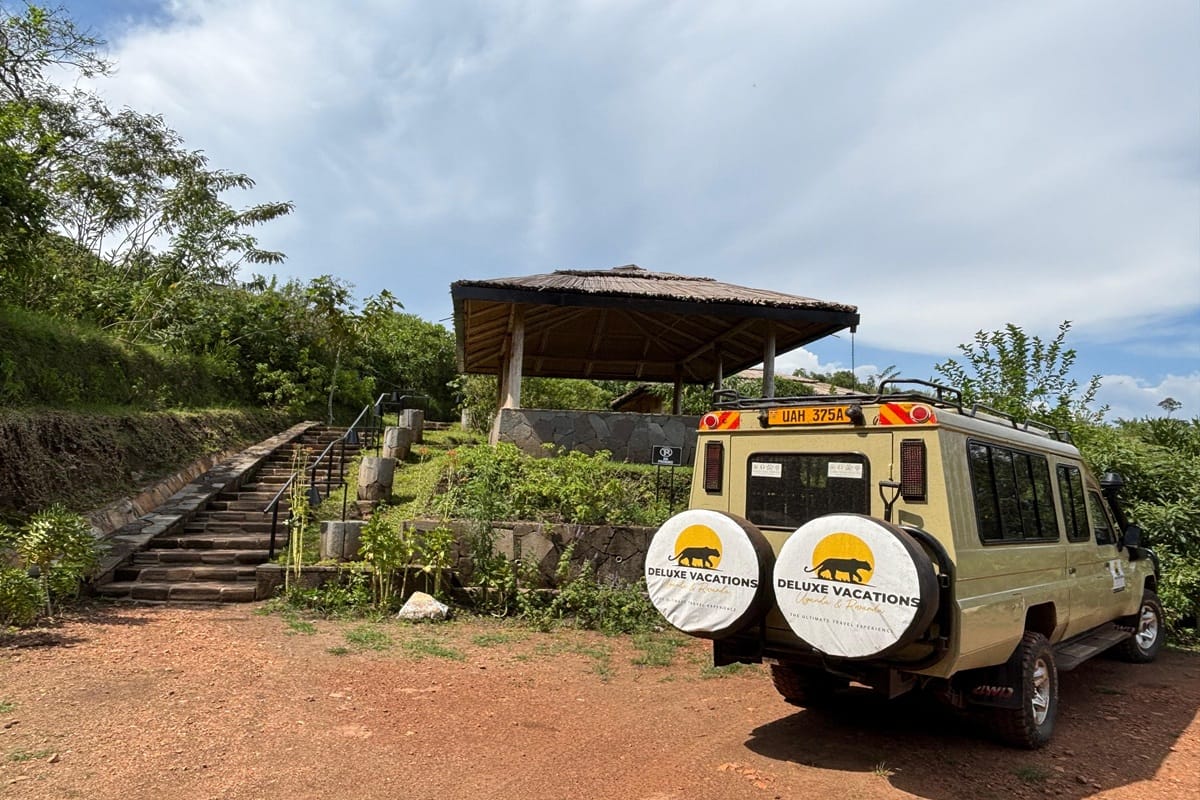
Where to stay for chimpanzee trekking in Kibale
For chimpanzee trekking in Kibale National Park, lodge quality matters, but location matters just as much. A beautiful property an hour from Kanyanchu may be appropriate for a slower three-night stay, yet less convenient before an early briefing. Always check the actual transfer time to your assigned trailhead rather than relying only on the words “Kibale” or “Fort Portal” in a lodge description.
Premium and luxury stays
- Kibale Lodge: A high-end ridge-top property with views toward the Rwenzori Mountains and an approximate 30-minute transfer to the main chimpanzee area.
- Chimpundu Lodge: Spacious cottages, a pool and a forest-edge setting that works well for travellers wanting comfort close to Kibale.
- Primate Lodge Kibale: Its main advantage is location within the forest near Kanyanchu, which simplifies an early trekking morning.
Comfortable mid-range choices
- Isunga Lodge: A crater-lake area setting with broad views and an approximate 25-minute drive to Kanyanchu.
- Kibale Forest Camp: A forest camp close to the trailhead and Bigodi, with an atmosphere that suits travellers who want to remain immersed in the natural setting.
- Chimpanzee Capital Safari Lodge: A practical base to consider when its room category, service level and transfer time match the itinerary.
Property standards, management and rates can change. Rather than choosing by category alone, compare the room, meal plan, road access, distance from the correct briefing point and the experience you want after the trek.
How many nights should you spend in Kibale?
For most visitors, two nights is the practical minimum:
- Day 1: Arrive from Entebbe, Kampala, Murchison Falls or another western Uganda stop.
- Day 2: Chimpanzee trekking, followed by Bigodi or rest.
- Day 3: Continue to Queen Elizabeth National Park or the next destination.
Choose three nights when you want the Chimpanzee Habituation Experience, dedicated birding, crater-lake walks or time to enjoy a high-end lodge without treating it only as a place to sleep.
A one-night plan is usually too tight. It leaves little protection against a delayed road transfer and encourages an immediate departure after the trek.
How Kibale fits into a Uganda safari itinerary
Chimpanzee trekking in Kibale National Park fits naturally into Uganda’s western circuit. The strongest route depends on where the journey starts and which experiences matter most.
Classic primates and wildlife route
Entebbe → Kibale → Queen Elizabeth National Park → Bwindi → Lake Mburo → Entebbe
This is the most natural sequence for first-time visitors who want chimpanzees, savannah wildlife, a Kazinga Channel boat cruise and gorilla trekking. Eight to ten days creates a more comfortable pace than compressing the circuit into a week.
Extended Uganda route
Entebbe → Murchison Falls → Kibale → Queen Elizabeth → Bwindi → Entebbe
Allow roughly ten to twelve days. The transfer from Murchison Falls to Kibale is long, but the route offers Uganda’s strongest combination of Big Five viewing, Nile experiences, chimpanzees and mountain gorillas. Read our Murchison Falls visitor’s guide when considering this circuit.
Short Kibale and Queen Elizabeth route
Travellers with less time can combine Kibale with Queen Elizabeth National Park in four to five days by road, depending on the starting and finishing point. Domestic flights can shorten one side of the journey, although lodge transfers still need to be allowed for.
For a ready-made example, review our Primates & Wildlife safari. A tailor-made itinerary can adjust the pace, lodge standard and activities around your interests.
Who is Kibale best suited to?
Kibale is particularly rewarding for:
- First-time visitors who want Uganda’s most established chimpanzee experience
- Travellers combining chimpanzees with gorillas and savannah wildlife
- Wildlife photographers comfortable with a fast-moving forest subject
- Birders and primate enthusiasts who can spend three or more nights
- Couples and private groups who value a flexible, guided itinerary
- Families travelling with children old enough to meet UWA’s age requirement
Travellers with very limited time may prefer a chimpanzee experience that already lies on their route, such as Budongo near Murchison Falls or Kyambura Gorge within Queen Elizabeth National Park. Kibale remains the stronger choice when chimpanzees are a central priority rather than a convenient addition.
Frequently asked questions about Kibale chimpanzee trekking
How much is a Kibale chimpanzee permit in 2027?
From 1 January 2027, a standard permit costs USD 300 for a foreign non-resident, USD 200 for a foreign resident, USD 100 for a Rest of Africa visitor and UGX 180,000 for an East African citizen. The Chimpanzee Habituation Experience costs USD 400, USD 300, USD 250 and UGX 250,000 respectively.
How long is chimpanzee trekking in Kibale?
The complete activity usually lasts about two to five hours. Once the assigned chimpanzee community is located, standard permit holders can spend up to one hour observing it.
What is the minimum age for chimpanzee trekking in Kibale?
UWA’s published chimpanzee rules give a minimum age of 12. Reconfirm the rule for the specific permit and tracking date because some older park material still carries a different age.
Is the morning or afternoon chimpanzee trek better?
Neither session guarantees a better sighting. Morning trekking usually fits the wider itinerary more easily and leaves the afternoon for Bigodi, rest or an onward transfer. Afternoon trekking suits a slower morning but should not be paired with a same-day drive from Entebbe or Kampala.
What is the difference between chimpanzee tracking and habituation?
Standard tracking provides up to one hour with a habituated community once it is found. The habituation experience provides up to four hours with a community still becoming accustomed to human presence and usually occupies most of the day.
Is chimpanzee trekking in Kibale difficult?
It is generally less steep than gorilla trekking in Bwindi, but the forest can be muddy, uneven and slippery. Most active travellers can manage it with good footwear, rain protection and a willingness to keep pace when the chimpanzees move.
Can I combine Kibale with gorilla trekking?
Yes. Kibale, Queen Elizabeth National Park and Bwindi form one of Uganda’s most logical safari routes. Read our complete gorilla trekking guide before choosing dates and permit sectors.
How early should I book?
For peak travel months, three to six months is a sensible minimum for chimpanzee permits and lodges. When gorilla trekking is included, the gorilla permit and preferred Bwindi sector often determine the earlier planning timeline.
Plan your Kibale chimpanzee safari with a Uganda-based specialist
Successful chimpanzee trekking in Kibale National Park depends on the details around the trek: the correct permit, a lodge near the assigned trailhead, realistic transfer times and enough nights to enjoy the forest without rushing.
Deluxe Vacations Uganda can arrange chimpanzee and gorilla permits, carefully selected accommodation, private 4×4 transport, professional safari guides, domestic flights where useful and a complete tailor-made Uganda itinerary.
Tell us your preferred travel dates, group size and lodge style, and we will design a private Kibale safari around you.